Elul Newsletter
5786/7 - 2025/6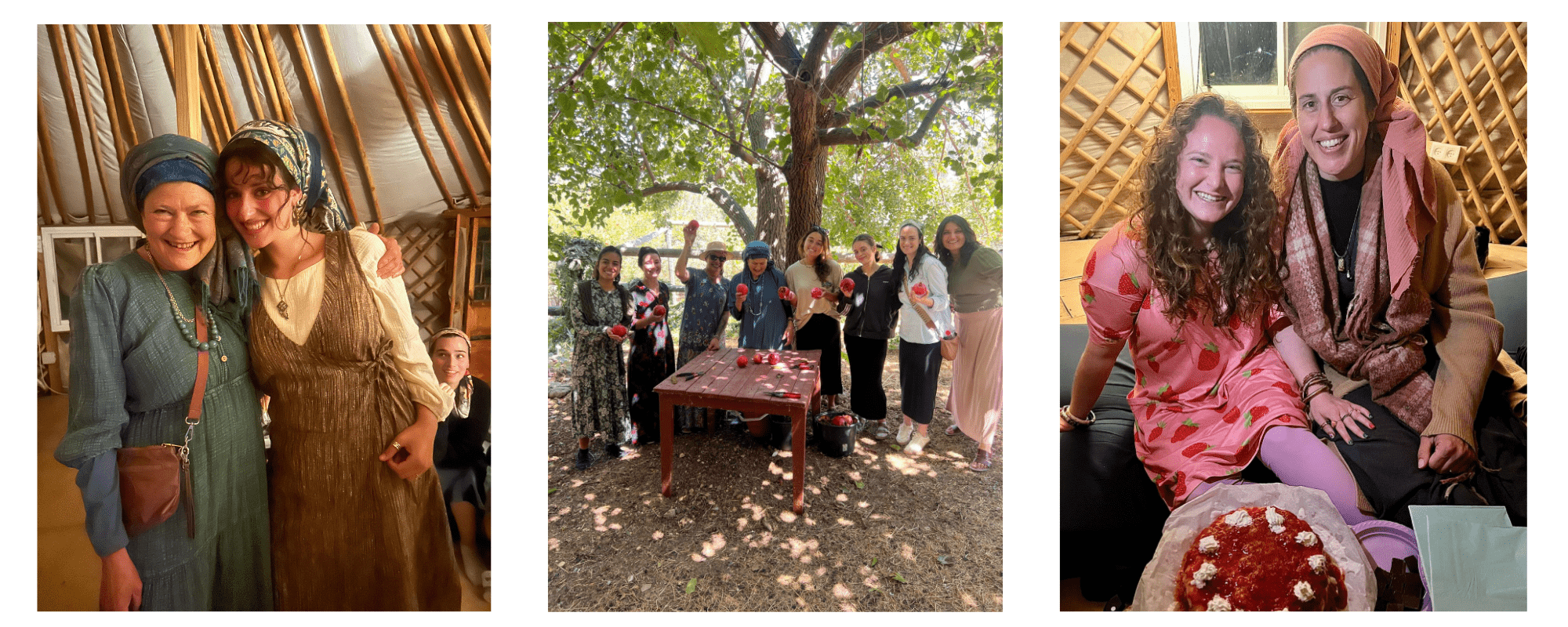
I’m pleased to share with you a few highlights of Holistic Torah from the Land and give you the opportunity to partner with us in offering women of all ages and from all walks of life a unique, integrated Torah experience that will strengthen their Jewish identity and prepare them for keeping a Jewish life and home.
May Hashem bless you with health, happiness, love, and abundance from Above and below!
!שנה טובה תכתיבו ותחתימו Shana Tovah, Tikateivu v’Tichateimu!
May you be inscribed in the Book of Life!
With Blessings of the Torah & the Land, Chana Bracha Siegelbaum
What Does the Concealed Moon of Rosh Hashana Teach Us About Teshuvah?, a D’var Torah by Rebbetzin Chana Bracha
 Rosh Hashana is unique among the festivals. It is the only holiday that occurs when the moon is obscured. As King David declares: “בַּכֵּסֶה לְיוֹם חַגֵּנוּ” “At the concealed time for our festival” (Tehillim 81:4).
The Gemara explains that this verse refers to Rosh Hashana, the festival that takes place when
the moon is hidden from view (Babylonian Talmud, Rosh Hashana 8a).
At first glance, this seems puzzling. If Rosh Hashana celebrates the creation of the world and the coronation of Hashem as King, would it not be more fitting for it to occur when the moon shines in its fullness?
Yet perhaps therein lies one of the deepest lessons of the Day of Judgment.
The moon appears to diminish until it disappears entirely. Yet its disappearance is not a sign of loss. It is the necessary prelude to renewal. Precisely when the moon is hidden, a new cycle is already beginning.
As we enter the month of Elul, many of us naturally focus on our shortcomings. We examine the past year and become painfully aware of how much remains unfinished. Looking at ourselves, at our nation, and at the world around us, we may sometimes feel diminished, like the moon at the end of the month.
This feeling has been especially palpable during the prolonged months of war. Since last Elul, uncertainty has become a familiar companion. Despite the B’erot Bat Ayin bomb shelter standing strong since October 2023, some students never arrived due to cancelled flights and concerns about the security situation. Others who did arrive carried worries for loved ones serving on the front lines, grief for those who had fallen, and anxieties about the future. Like so many institutions throughout Israel, we have faced challenges that often seemed beyond our capacity. Yet the hidden moon teaches that what appears to be decline may actually be concealed ascent.
Rabbi Pinchas of Koritz explains that before Rosh Hashana the entire creation enters a state he calls dormita – a spiritual sleep. The worlds, the angels, and even the Torah itself undergo a process of withdrawal for the sake of receiving renewed life. Just as a person sleeps in order to awaken refreshed, so too creation experiences a hidden contraction before receiving a new influx of vitality (Imrei Pinchas, Sha’ar Shabbat U’Mo’adim §§105–110).
This teaching sheds new light on the hidden moon of Rosh Hashana. Hiddenness is not merely an absence of light. It is the womb of renewal.
Concerning the comparison between Israel and the moon, our sages teach: “Why were Israel compared to the moon? Just as the moon governs by day and by night, so Israel govern in this world and in the World to Come. Perhaps they are deficient, like the moon which diminishes each month? Therefore, Scripture says: ‘Radiant as the sun.’ Just as the sun is complete, so Israel are complete in mitzvot” (Midrash Tehillim 22).
At first glance, this teaching seems puzzling. If Israel are compared to the moon, why emphasize the completeness of the sun? Perhaps the answer lies in the very nature of the moon itself. Although it appears to diminish, its fullness is merely concealed from view. Even when only a thin sliver is visible, the moon itself remains whole. Its apparent deficiency is merely hiding its fullness. So too, during Elul as we examine our lives, it is easy to focus on our deficiencies and failings. Like the waning moon, we may feel diminished by our shortcomings and by the challenges facing our people. Yet the Midrash reminds us that the apparent diminishment of the moon does not reflect its essential nature. Beneath what appears lacking lies an inner wholeness waiting to be revealed. The task of teshuvah is to reveal that hidden fullness and allow it to shine once again.
Women understand this rhythm especially well. Much of the most important work in the world takes place quietly and unseen. Seeds germinate beneath the soil. A child develops hidden within the womb long before its presence becomes visible. Character is built through countless unnoticed choices. Spiritual growth often occurs beneath the surface, known only to Hashem. Like the concealed moon, the deepest transformations frequently take place in hiddenness.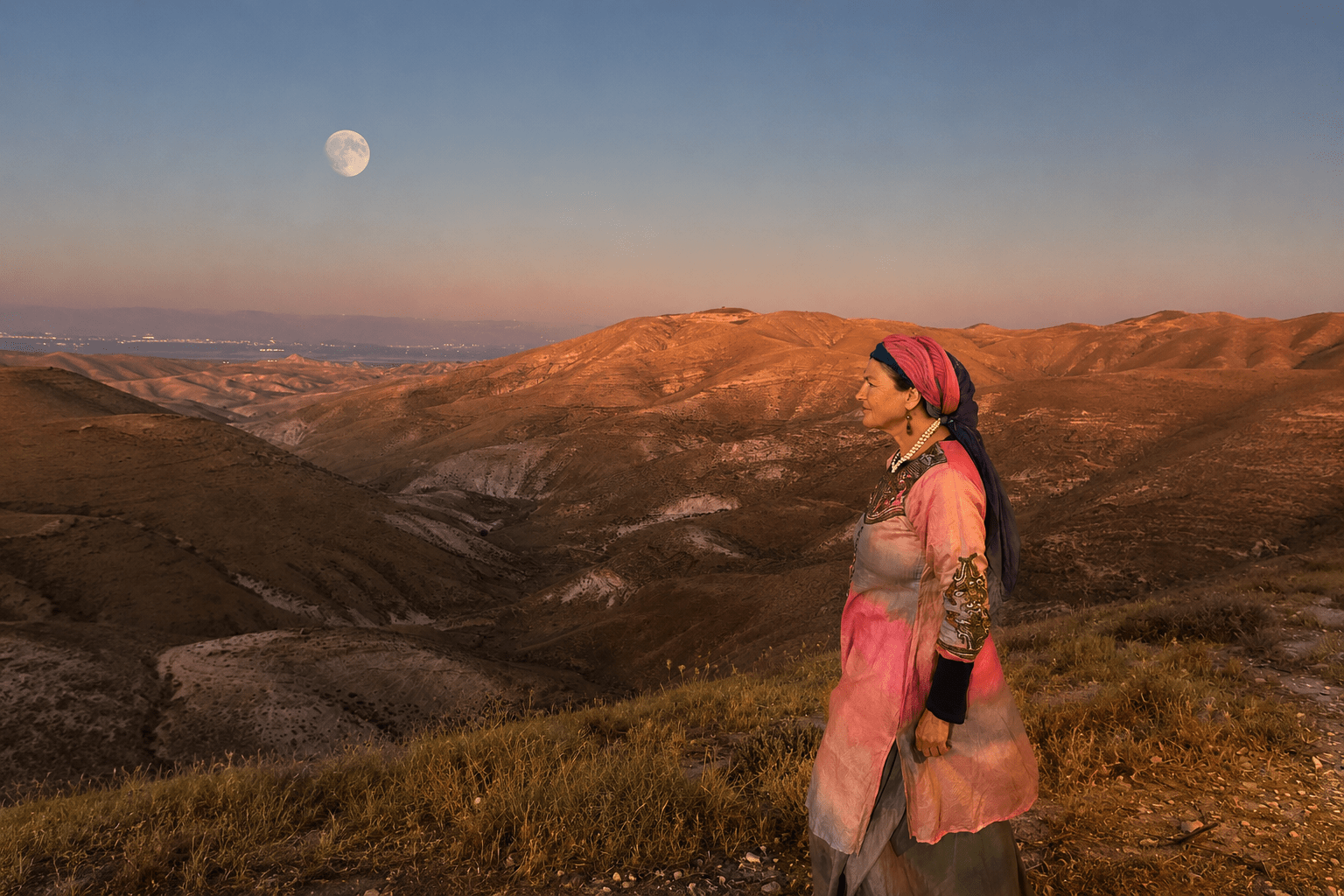
As we stand before Hashem on Rosh Hashana, let us not despair over what remains incomplete. Instead, let us trust that even in moments of apparent darkness, Hashem is renewing us. The hidden moon reminds us that growth is not always visible.
Sometimes the greatest transformations are taking place precisely when we cannot yet see them.
May Hashem grant us the humility to recognize our dependence upon Him,
the faith to trust His hidden guidance, and the merit to witness the renewal that He is preparing for us, for the Jewish people, and for the entire world.
From Three Hours of Prayer to a Year of Transformation
Bitya Bella Khavasov’s Journey to Midreshet B’erot Bat Ayin
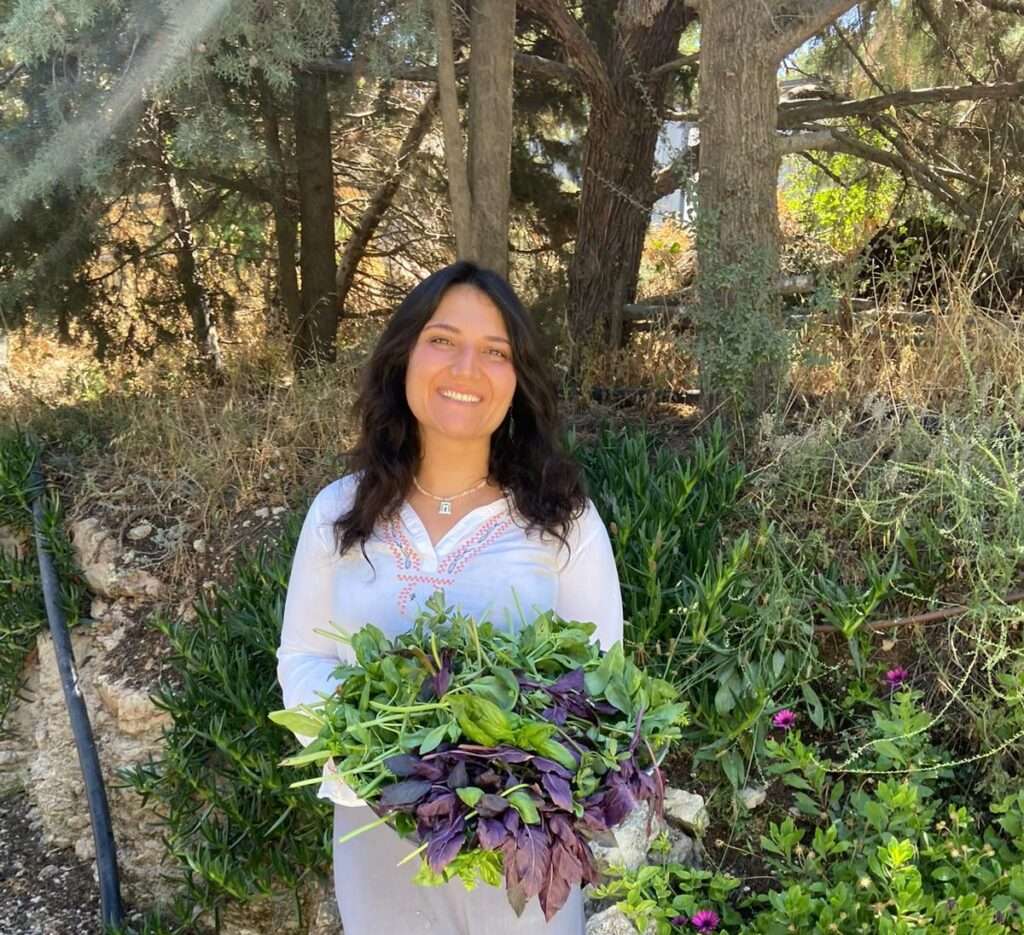 I grew up in the Bukharian Jewish community in Queens, New York. From an early age, I felt drawn to helping others heal. Today I serve as an Internal Family Systems (IFS) therapist, massage therapist, and counsellor. My passion is helping people reconnect with themselves through bodywork, meditation, breathwork, and emotional healing, creating a safe space where they can experience greater wholeness and inner peace. I often say that I work for Hashem because I see my profession as a way of serving Him by helping others.
Although I loved my work and found it deeply meaningful, I sensed that something was missing. I had achieved many of the goals I had set for myself and was helping people every day, yet I longed for something deeper. I wanted to be surrounded by Torah, true sisterhood, and people whose lives were centred on loving and serving Hashem.
One day I spent three hours in hitbodedut (personal prayer), pouring out my heart
to Hashem.
I prayed, “Hashem, I’ve learned my massage practice. I’m helping people through therapy and alternative healing. But now I want to be surrounded by Torah, true sisterhood, honest people, and people who genuinely fear and love You.”
I had no idea that my answer would come in the form of an unexpected phone call.
While I was still seeking direction, Rebbetzin Chana Bracha Siegelbaum called and asked, “Bella, when are you coming to Midreshet B’erot Bat Ayin Elul program? We need you.”
At that moment, I knew Hashem was answering my prayer.
Still, I asked Him for one more sign. I prayed that if this was truly His will, He would help me find a ticket to Israel for less than $700. Soon afterward, I found a flight for only $680. There was no longer any doubt in my mind that Hashem was leading me to Midreshet B’erot Bat Ayin.
What began as an Elul program became an entire year of transformation.
As someone who spends her life helping others heal emotionally and physically, I discovered that I also needed a place where I could continue my own growth, to reset and heal my nervous system. B’erot gave me that gift. Through Torah learning, heartfelt prayer, music, joyful celebrations, and authentic relationships, I found a community that nourished my own soul while strengthening my ability to serve others. It reminded me that the deepest healing begins with our relationship with Hashem.
Every day at B’erot became part of the answer to my prayer. Learning Torah from Rebbetzin Chana Bracha Siegelbaum and the other inspiring teachers, celebrating Rosh Chodesh and the Yamim Tovim together, sharing Shabbat meals, singing, and living among women who genuinely wanted to grow closer to Hashem created the environment I had longed for. Instead of always holding space for everyone else, I found a place where I, too, could be nurtured and find the balance between holding and being held. The warmth, wisdom, and personal guidance I received from the teachers and mentors at B’erot Bat Ayin helped me grow not only in Torah knowledge but also in my relationship with Hashem, people around me and in my own inner healing.
B’erot also taught me that genuine spiritual growth begins with personal responsibility. I learned that my thoughts, my speech, and my actions are deeply intertwined, and that true inner work requires taking responsibility for each of them. At the same time, I was blessed with the opportunity both to guide others and to be guided myself – emotionally, mentally, physically, and spiritually.
Looking back, I can clearly see Hashem’s Hand guiding every step of my journey. He answered my prayers in ways I never could have imagined, leading me to a place that truly became my spiritual home. I am deeply grateful for the love, respect, and genuine care I experienced at Midreshet B’erot Bat Ayin. Being surrounded by women who sincerely love Hashem strengthened my own relationship with our Creator and reminded me that every heartfelt prayer is heard.
Today, I know with certainty that when we place our trust in Hashem and continue asking Him for guidance, He leads us exactly where we are meant to be and reveals just how good life can become.
Renewing Our Student Caravans –
Preserving the Past, Building for the Future
For more than thirty years, the student caravans at Midreshet B’erot Bat Ayin have served as a home away from home for hundreds of women who came seeking Torah, healing, friendship, and connection to the Land of Israel. When we first received these caravans, they were already several years old. Since then, they have weathered scorching summers, winter storms, and the daily wear and tear of continuous use.
Like the women who have passed through their doors, the caravans have their own stories to tell. Within their walls, students have learned Torah, celebrated Shabbat and festivals, forged lifelong friendships, and taken important steps on their spiritual journeys. Yet after more than three decades of service, the caravans have reached the point where constant repairs are no longer enough.
Over the years, we have patched leaks, repaired plumbing, replaced fixtures, and addressed countless maintenance issues.
Today, however professionals have advised us that many of the underlying systems have reached the end of their useful life and require comprehensive renovation. The work includes replacing damaged floors, moldy insulation, deteriorated ceilings, aging plumbing and drainage systems, roof repairs, electrical improvements, window sealing and screens, and new doors and locks. Rather than continuing an endless cycle of temporary fixes, we hope to restore these caravans properly so that they can continue serving future generations of students.
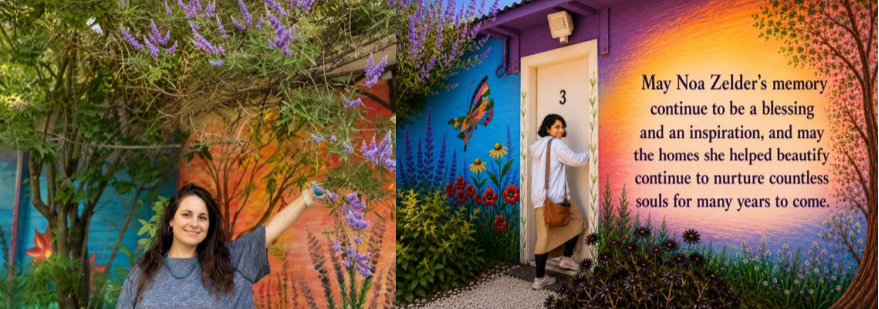
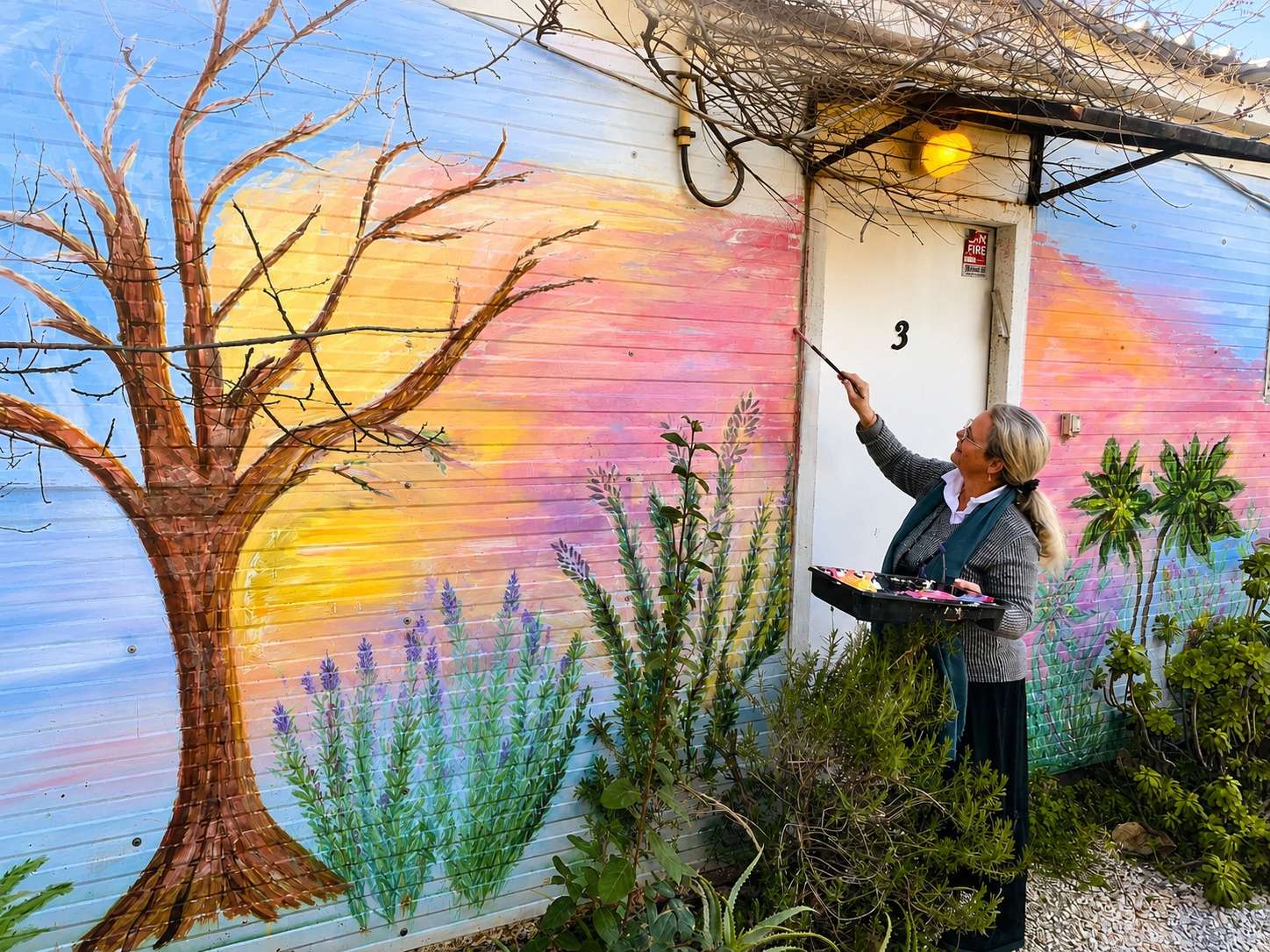
This project carries a special sentimental significance as well. In 2025, our beloved student madricha, Noa Zelder ע”ה led mural-painting workshops that transformed the caravans into vibrant works of art. Together with the students, she filled the outer walls with flowers, trees, butterflies, and colors that reflected the beauty, creativity, and joy she brought into the world. Her final touches transformed ordinary caravans into treasured works of art that continue to brighten our campus and inspire all who pass by. Tragically, Noa’s life was cut short far too soon. Yet her spirit continues to live within the Midrasha she loved.
As we prepare to renovate the caravans, we hope to preserve and restore as much of this artwork as possible. In this way, the renovation is not only about repairing buildings. It is also about honoring the memory of a remarkable young woman whose creativity touched so many lives.
We invite you to partner with us in this important project. Together, we can preserve the warmth and beauty of B’erot Bat Ayin while creating safe, comfortable, and inspiring homes for the students of today and tomorrow.
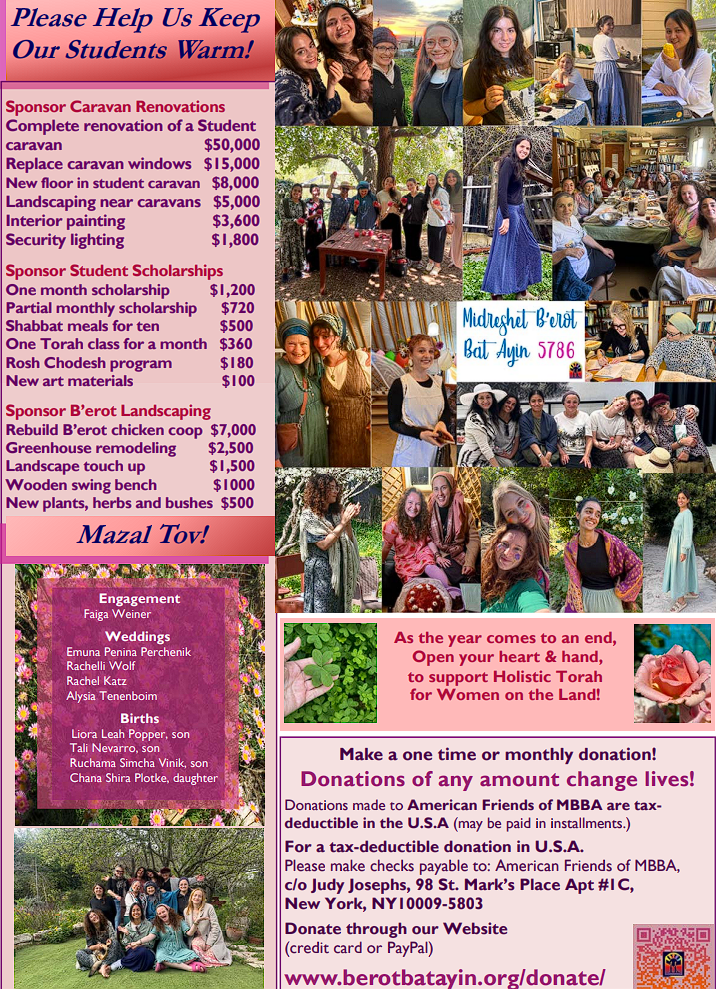
Ready to Change Lives?
$US and Israeli Shekel Tax Deductible Receipts available!
Thank You!
Where Soulmates Meet – The Wellsprings of B’erot
One of the most beautiful motifs woven throughout the Torah is the meeting at the well. The continual rising of the well reflects a woman’s yearning for her soulmate, making the well itself a fitting place for destined couples to meet (Maharal, Gevurat Hashem, Chapter 19). When Avraham’s servant sought a wife for Yitzchak, he found Rivkah at the well. Ya’acov first encountered Rachel at the well, and Moshe met Tzipporah while protecting the daughters of Yitro at the well. Thus, the wellspring becomes the setting where Hashem brings together the souls destined to build faithful Jewish homes. It is no coincidence that our Midrasha bears the name B’erot – “Wellsprings.” Surrounded by the natural springs that grace the hills of Bat Ayin, Midreshet B’erot Bat Ayin strives to be a living wellspring where women draw nourishment from Torah, Chassidut, Emunah, and the Land of Israel. Here they deepen their relationship with Hashem, discover their unique mission, and prepare for the next stage of their lives.
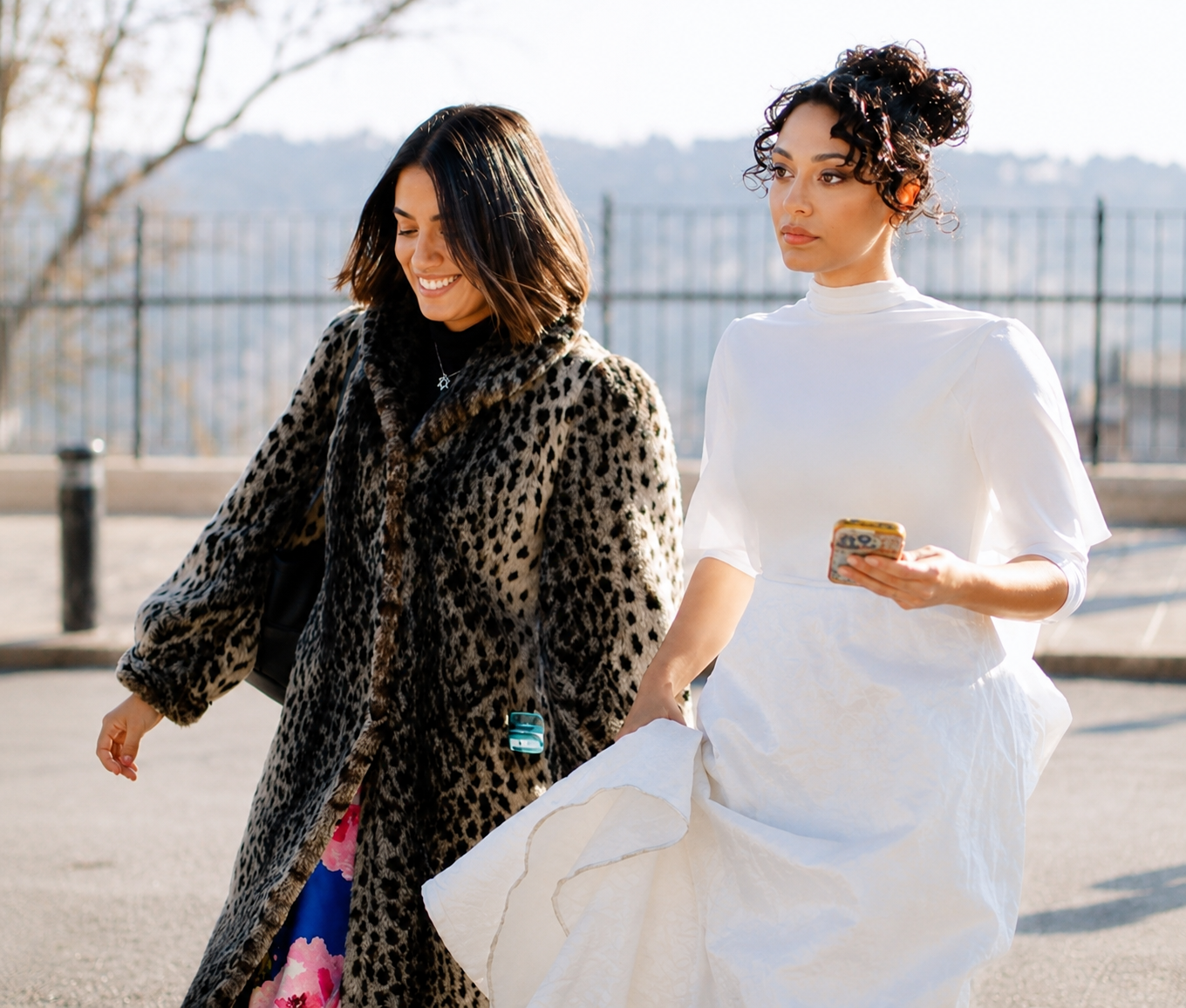
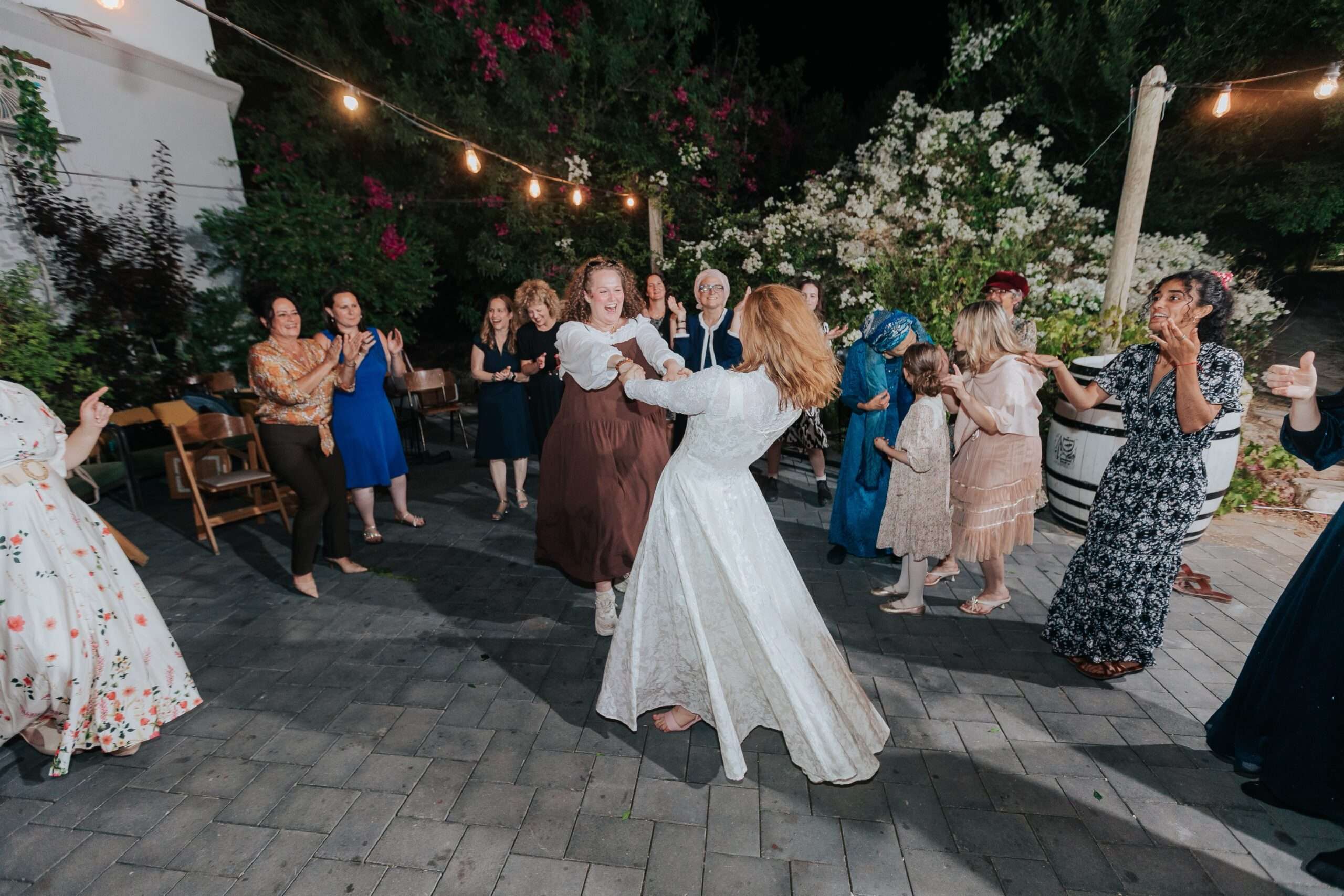
This year, we experienced a remarkable blessing. Four women whose journeys led them to B’erot became engaged or married, each in her own unique way, yet all reflecting the quiet work of Divine Providence.
The first to marry was Emunah Peninah Pechenik, a ba’alat teshuvah from a traditional family in Buffalo with Hispanic roots. A pharmacist by profession, Emunah came to B’erot seeking to deepen her relationship with Torah and Hashem. She married a young man from a French Torah-observant family who serves in the IDF. The young couple has settled in Haifa near his military base, carrying with them the Torah values Emunah cultivated during her time at the Midrasha.
Early this summer, Rachel Katz also merited to build her Jewish home. Before arriving at B’erot, Rachel worked as a shepherd on a farm and intended to return there after studying at our Midrasha for just two months. Captivated by the unique atmosphere of Torah learning, the simplicity and natural beauty of Bat Ayin, and the spirit of spiritual growth, she stayed from October until June. During her time here, her dream of living a simple life close to nature while continuing to grow and inspire others expanded into building her own Jewish home. Through a B’erot alumna who continued to attend our part-time classes, Rachel was introduced to the young man who became her husband – another beautiful reminder that the blessings of B’erot continue to flow long after students leave.
Faygah Weiner, from a Chabad family in Montreal, became engaged after a year of remarkable personal growth. Faygah made aliyah together with her mother and found in B’erot a warm spiritual home where she immediately felt she belonged. This Elul, she will marry a young man from a Chabad family with Yemenite roots, beautifully reflecting the ingathering of the diverse roots of Am Yisrael into one new Jewish home.
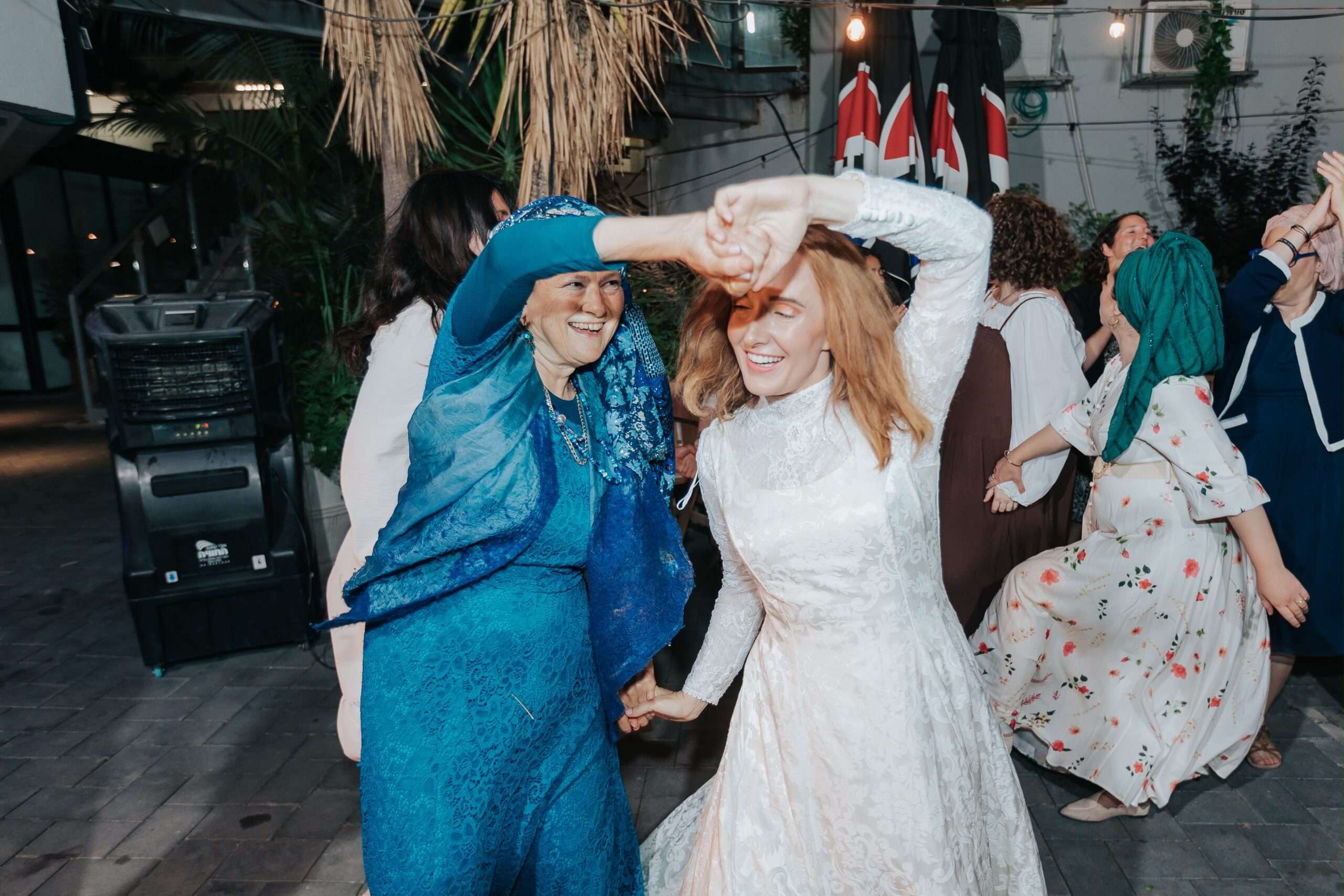
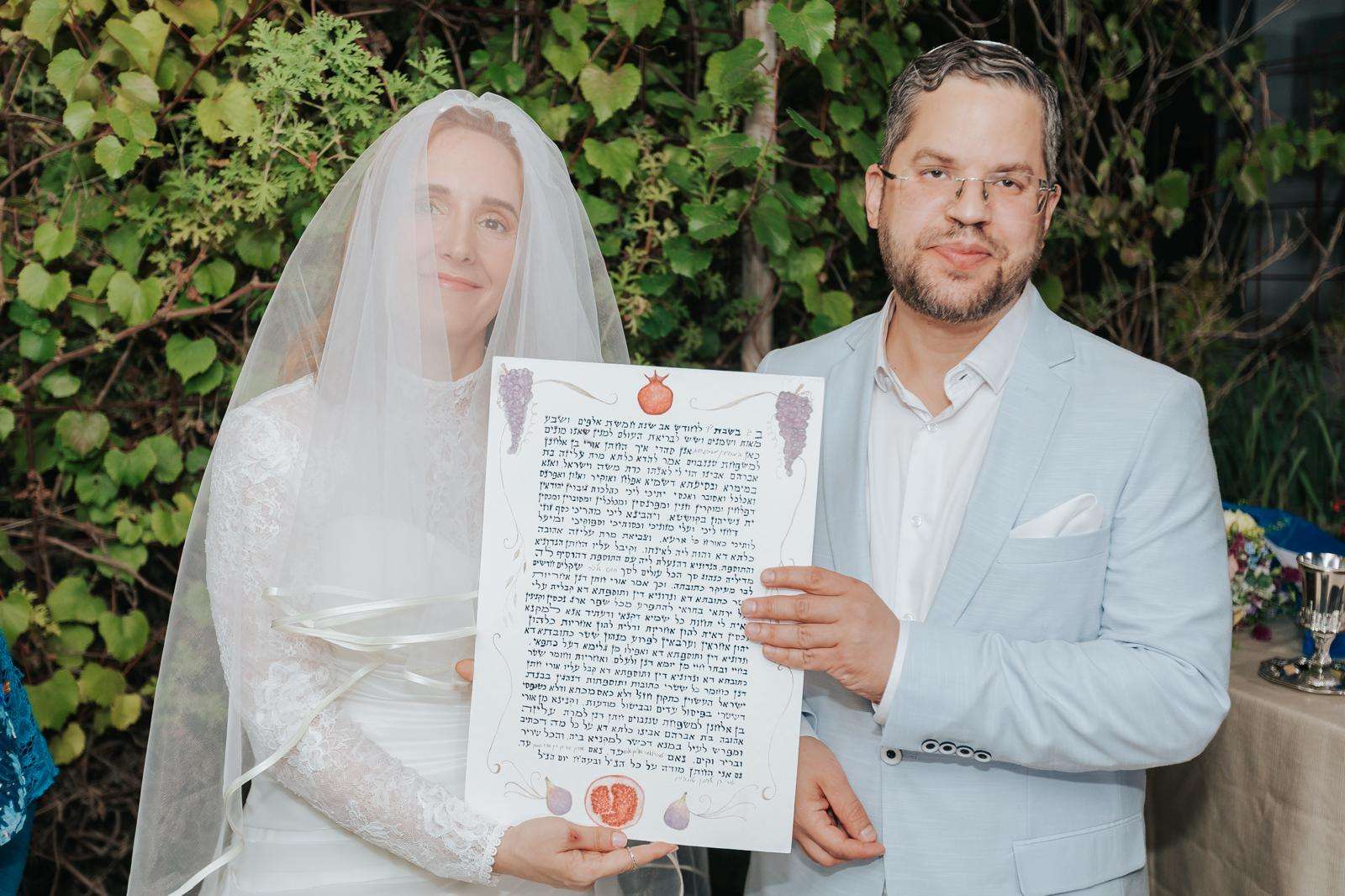
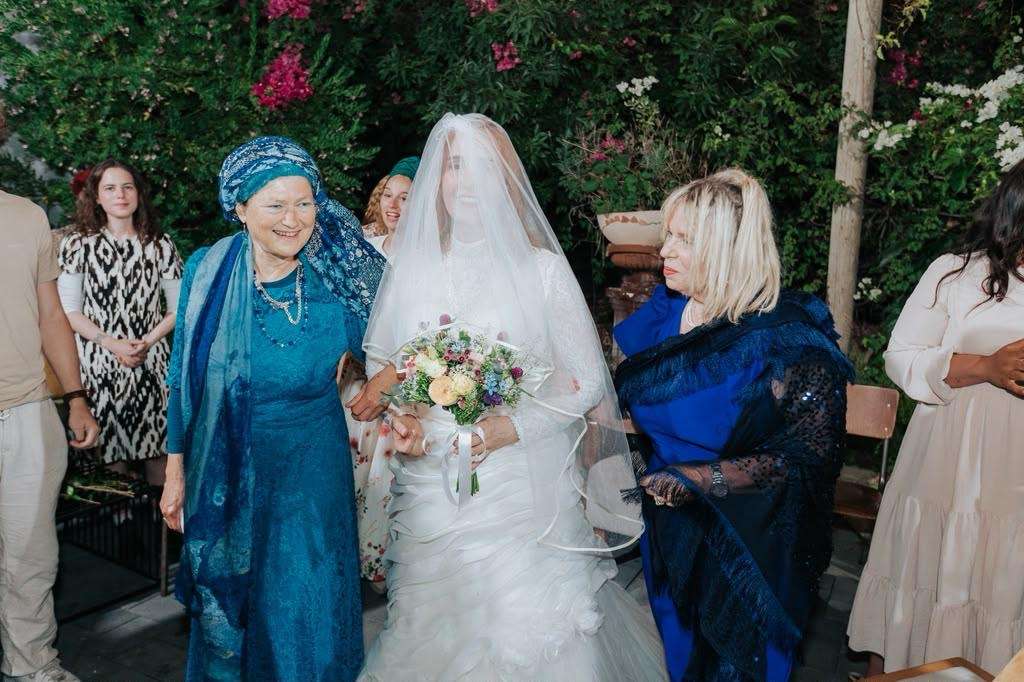
The most extraordinary journey of all was that of Alysia Duemler, now Aliza Ahuva Tennenboim. Raised in Texas in a home that was largely secular on her mother’s side and Christian on her father’s, she spent many years searching for truth while feeling deeply drawn to the Jewish people and Torah. She sensed a connection to her Jewish ancestry and longed to enter the covenant of Israel.
Through more than a year of study in B’erot’s online Orthodox conversion program while living in Canada, followed by a month of on-site preparation, she entered the Jewish people through an Orthodox conversion before Rabbi David Brovsky. On Tu B’Av, she and her husband, Ori Tennenboim, celebrated their Jewish wedding according to halacha. Their journey transformed not only Alysia’s life but also their home, as together they embrace Shabbat, kashrut, tefillah, the Jewish festivals, and a Torah way of life, with Ori taking upon himself the daily mitzvah of tefillin and Alysia embracing the mitzvot of modesty and family purity. Their story marks a historic milestone for Midreshet B’erot Bat Ayin as the first student to complete our online conversion program and continue directly to a Jewish wedding. They hope, with Hashem’s help, to raise Jewish children and one day settle in the Holy Land.
Watching these four women begin new chapters has reminded us that B’erot is more than the name of a Midrasha. Like the wells of our Matriarchs and Patriarchs, a wellspring is where living waters emerge from hidden depths. It nourishes, sustains, and gives life. Through Hashem’s loving providence, it becomes a place where soulmates meet and new Jewish homes begin.
May Hashem continue to bless Midreshet B’erot Bat Ayin, and may many more women who come to drink from its wellsprings of Torah and Emunah merit to build homes filled with holiness, joy, and the Divine Presence!